
3. Turning waste wood into engineered wood products

Circular timber construction begins with understanding where the wood comes from, how it is assessed and how it can be returned to use in a new form. This panel explains how the cross laminated timber (CLT) panels used in the WOODCIRCLES Travelling Demonstrator were produced.

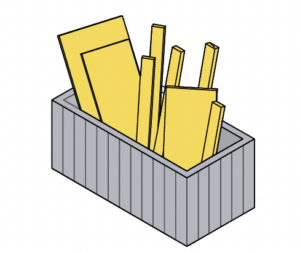
  1. COLLECTION OF WOOD MATERIALS Batches of reclaimed wood of various types and origins were collected.
  2. CLEANING AND QUALITY CONTROL
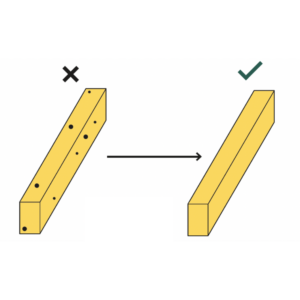
    The collected wood materials were cleaned and all metal pieces, such as nails and screws, were removed. The mechanical properties, including strength and stiffness, were measured and documented through standardised testing.
  3. CUTTING INTO LAMELLAS AND FINGER JOINTING
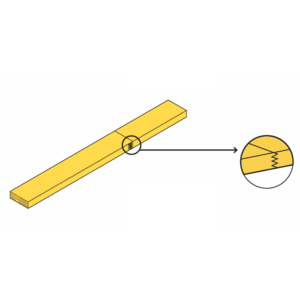
    The cleaned pieces of wood were cut to optimise the yield of 25-mm-thick lamellas, which were then finger-jointed to achieve uniform length.
  4. FROM LAMELLAS TO CROSS LAMINATED TIMBER
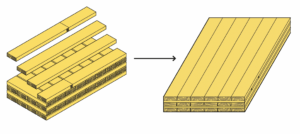
    The CLT was manufactured by Stora Enso using standard industrial processes. Two full-scale CLT master panels were produced: one made entirely from reclaimed wood (5/5 layers) and another containing 40% reclaimed wood in the two internal layers (2/5).

One of the main challenges in reusing construction materials is their non-uniform nature in terms of shape, dimensions and quality. While the ideal scenario would be the direct 1:1 reuse, implementing such practices at scale remains difficult due to the complexity of consistently matching material supply with market demand. The WOODCIRCLES solution addresses this challenge by processing recycled wood into products that are compatible with existing value chains. By enabling a more efficient alignment between supply and demand, this approach has the potential to accelerate the adoption of circular construction practices while ensuring competitiveness in both cost and quality.